Community placemaking & public art project in East Cork.
Cycle to the Sea sculpture series.
Presented in 2024. Cloyne to Ballynamona beach, Co. Cork.
-
“Cycle to the Sea” is a community-led public art and placemaking project in East Cork, funded by Creative Ireland through the Department of the Environment, Climate and Communications under the Creative Climate Action Fund.
The project was delivered in collaboration with artist Aoife Banville, local organisations, and community participants.
-
The project aimed to encourage a shift from car use to cycling by creating a more engaging and meaningful route between Cloyne village and Ballynamona Beach.
Through community co-design, the goal was to combine public art, wayfinding and placemaking to foster environmental awareness, promote sustainable travel, and strengthen local connection to place.
-
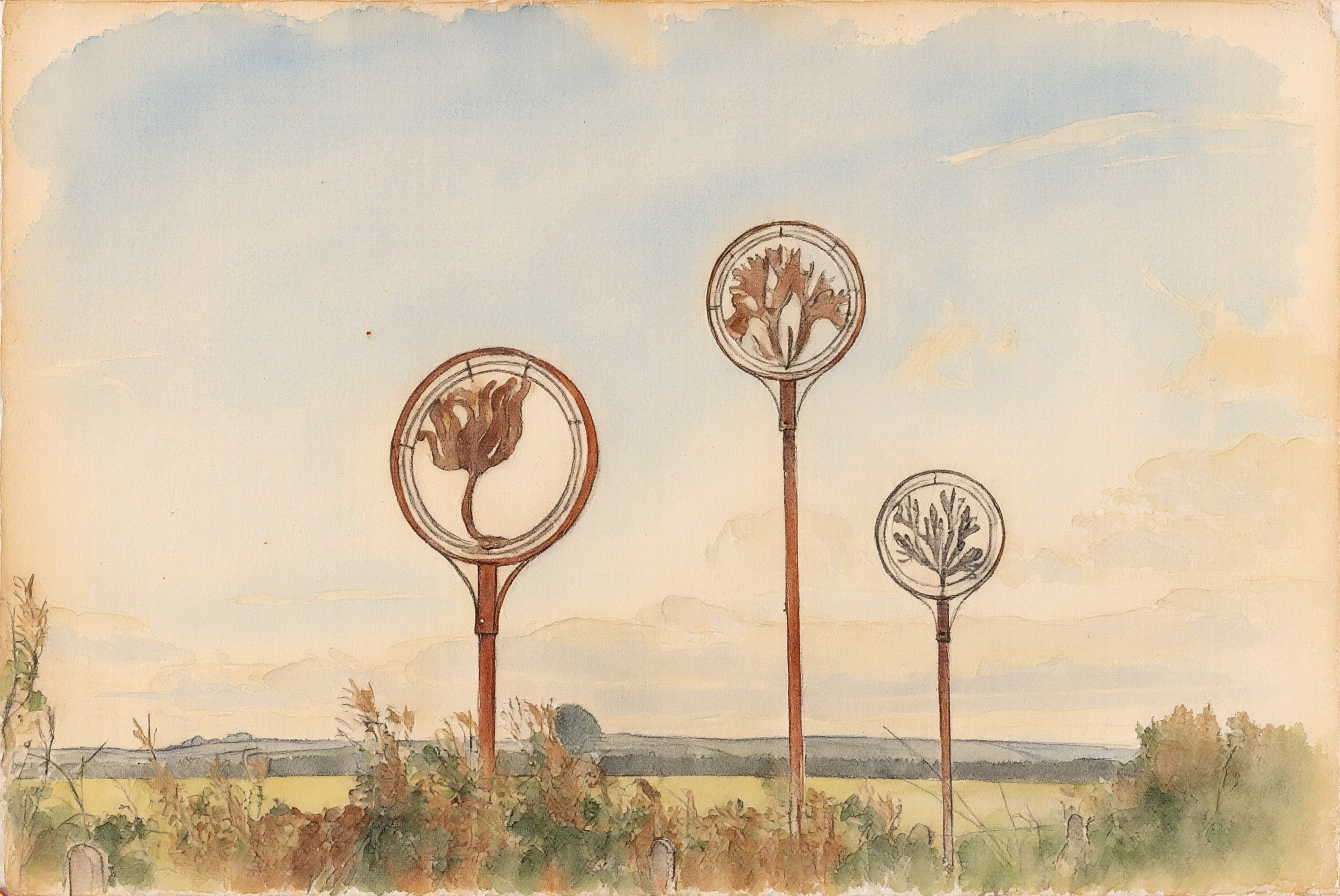
A series of nine sculptural installations were co-designed with the community and installed at key points along the route, acting as both artworks and navigational markers.
The project included workshops, prototype development, and collaboration with local fabricators to produce durable, site-specific pieces inspired by local wildlife, plant life and coastal ecology.
Wayfinding elements and guided community cycles were introduced, activating the route and encouraging ongoing use.
Cycle to the Sea is a placemaking project that brings together art, landscape and community to rethink how people move through their local environment.
Working with residents of Cloyne, the project set out to transform an existing rural route into a shared cultural and ecological experience.


Community engagement in the design process.
Through a series of open workshops, Cloyne residents helped the studio to define both the route and the sculptural elements and signs placed along it. Colourful designs were drawn on paper. The theme for the sculptures was chosen to reflect the identity, nature and stories of the area.
Making the sculptures.
Next, our team got to work on logistics of placement, materials and scale. The team decided in the prototyping process to cut artworks out of metal using a local laser-cutting company ROS Precision.
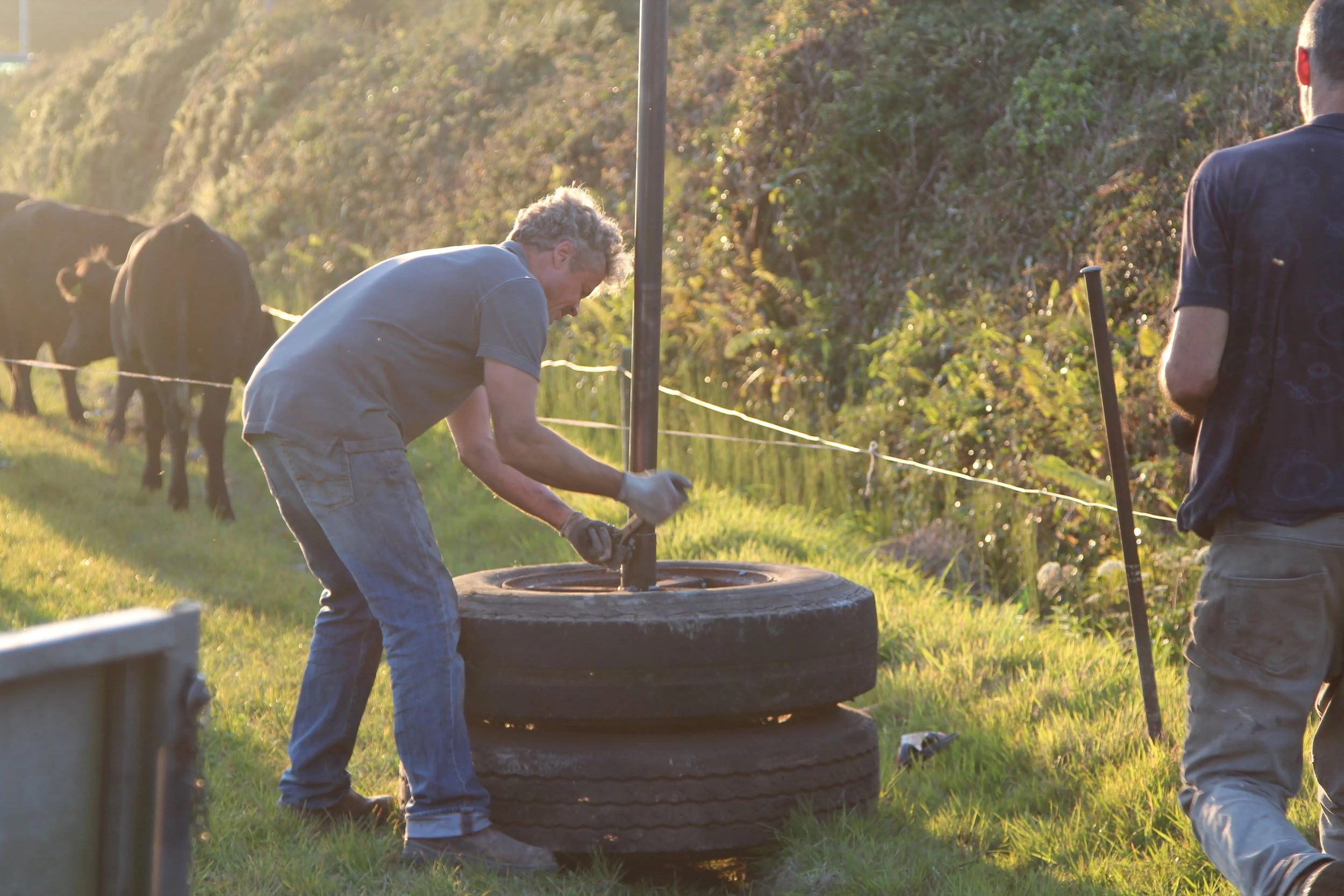
Once the discs were cut out, they were welded onto poles, given brackets for stability, and inserted into old tractor tyres with a sleeve welded inside. This mechanism makes the sculptures portable and easy to install.

9 sculptures symbolising the local nature were placed alongside the Cycle to the Sea route at three locations.
Beyond the physical installations, the project activated the route through guided cycles, workshops and community events, building a renewed relationship between people, place and sustainable travel.


After the sculptures.
-
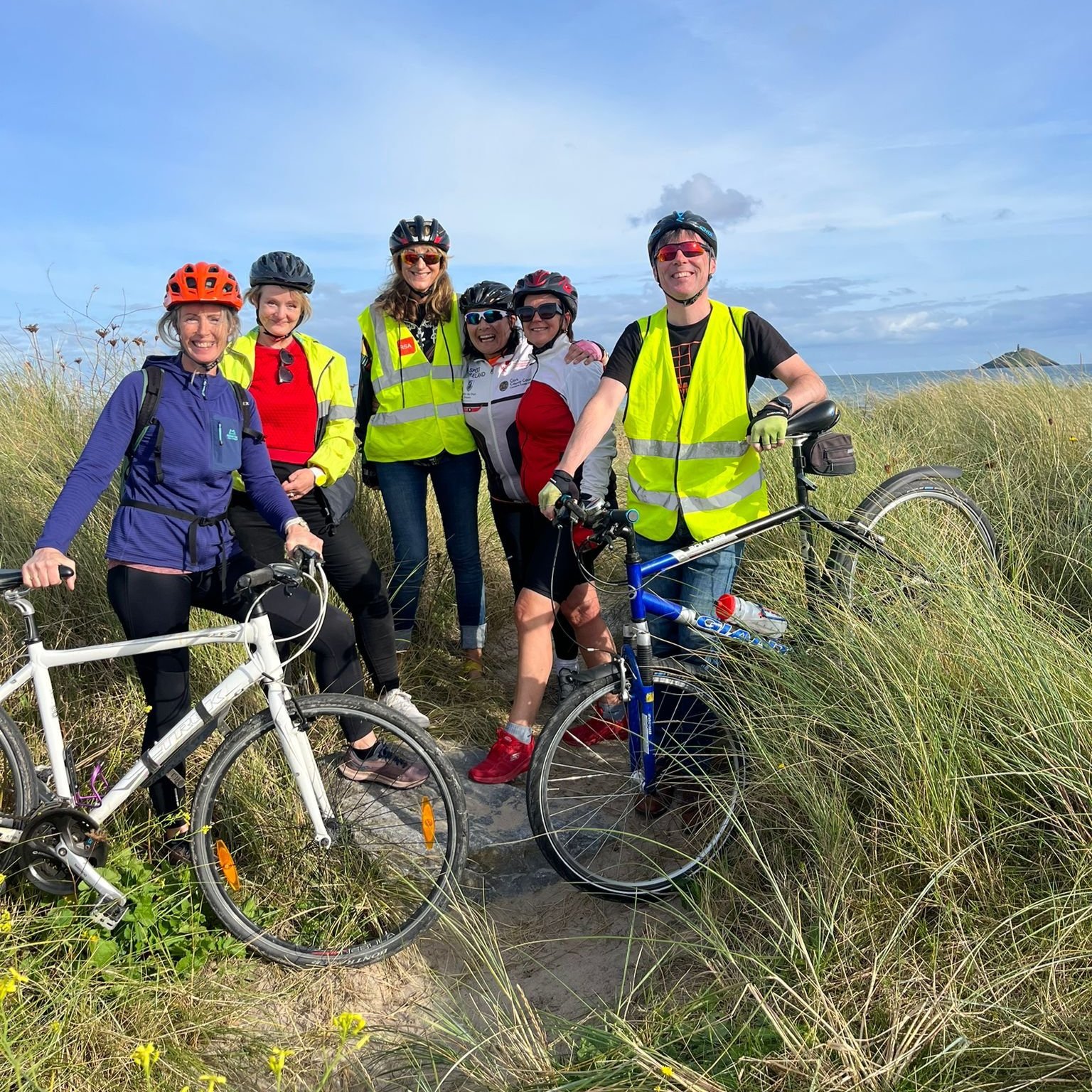
![Group of six people wearing cycling helmets and high-visibility vests, posing with bikes on a sandy path surrounded by dunes and grass, with the ocean and a small island in the background.]()
Bi-weekly guided cycles
These cycles were to showcase the sculptures, familiarise more community members with the project and its mission, gather feedback about future signage, and get cyclists to use the route.
-
![Colorful signpost with arrows pointing in different directions, situated in a grassy area near the beach, under a blue sky with scattered clouds.]()
Wayfinding installations
The paper signs made by families who joined our Wayfinding workshop with SECAD were printed on metal and turned into a colourful ‘wayfinding’ installation and placed at Ballynamona Beach.
-
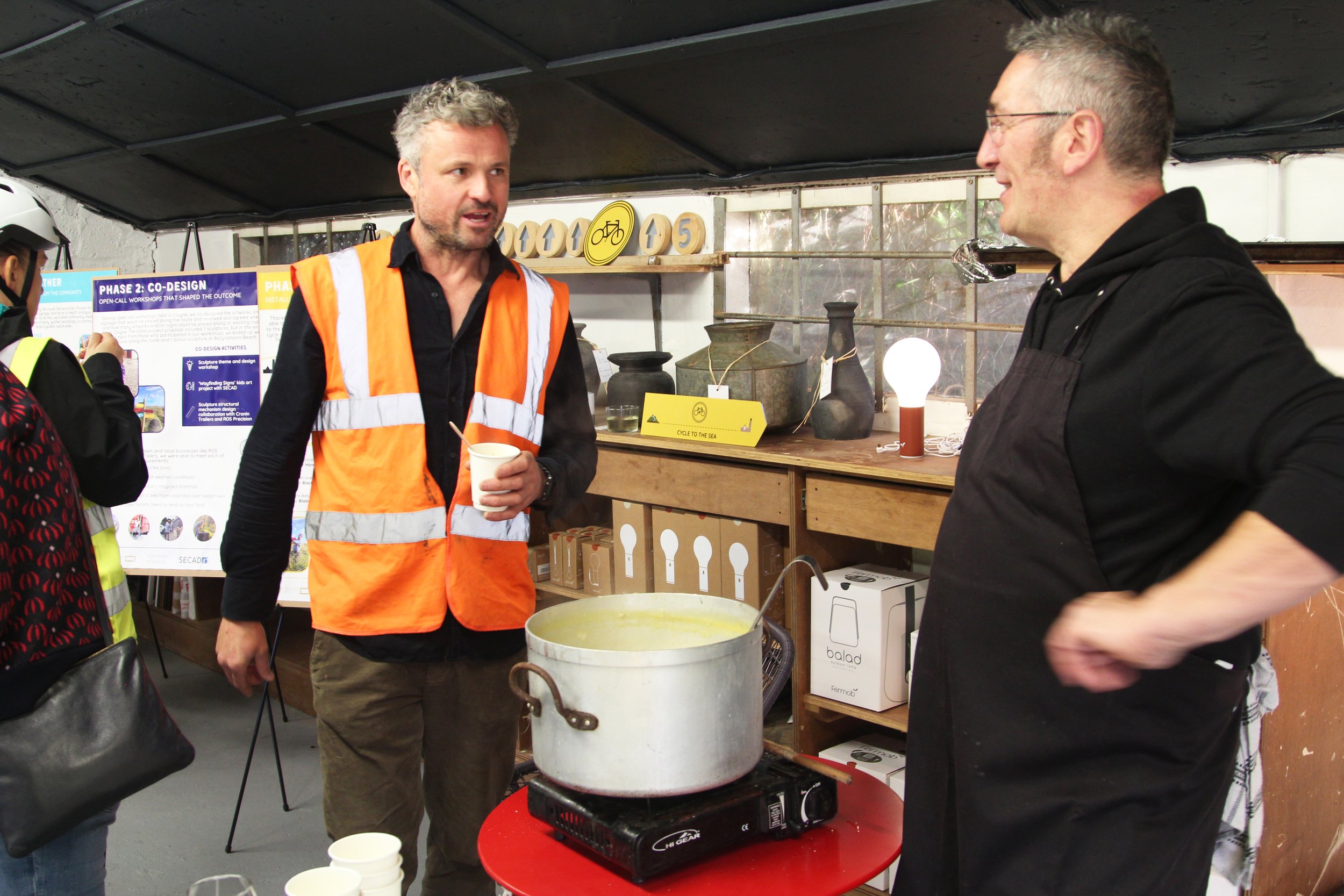
![Two men are talking at an event. One man is wearing an orange safety vest and holding a cup, and the other man is wearing a black hoodie. They are standing near a table with a pot and a red portable stove. Behind them are informational posters and shelves with various items.]()
Community gets together
Workshops, design process, shared cycles and common opening celebration brought the local community tightly together. The participants showed dedication and enthusiasm towards the shared project, even in bad weather conditions.
-
![Group of children and adults on a bicycle ride, wearing bright yellow safety vests, on a rural road with trees and houses in the background.]()
Opening celebration
On November 10th, we gathered project participants and other community members for a cycle along the route, stopping for a celebration with drinks, food, and activities half-way to Ballynamona Beach. Cork Bike Hire offered free bike hire for anyone who didn’t own a bike.